
- contact@lakhanpalco.com
- June 1, 2026
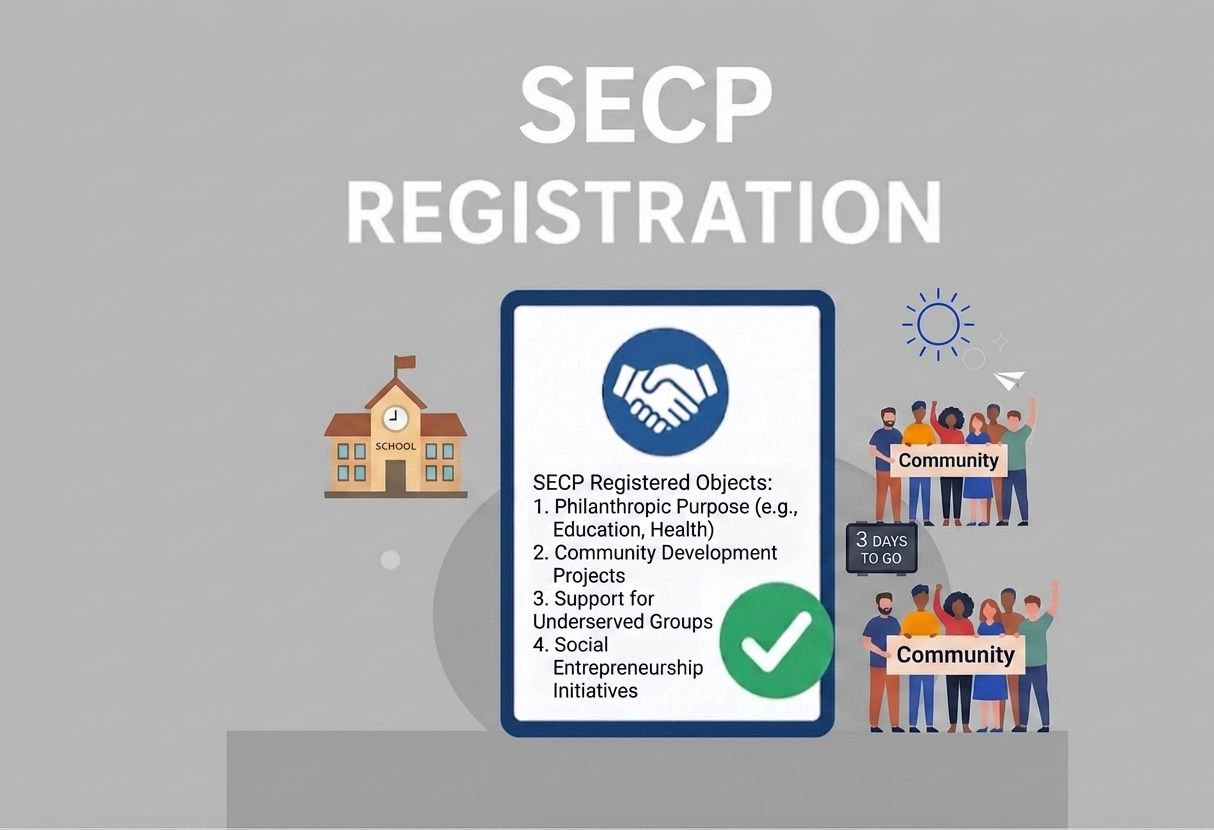
A Section 42 Company in Pakistan is a non-profit organization registered under the Companies Act, 2017 through the Securities and Exchange Commission of Pakistan (SECP). These companies are established for charitable, educational, religious, social welfare, scientific, sports, environmental, development, arts, cultural, or other public benefit purposes. The primary feature of a Section 42 company is that it operates on a non-profit basis, meaning that any income or profit earned by the organization cannot be distributed among members or directors and must only be utilized for promoting the objectives of the company. Due to its transparent legal structure and regulatory supervision, the Section 42 model is commonly adopted by NGOs, welfare organizations, educational institutions, professional associations, and development sector entities in Pakistan.
The process of registration starts with conceptual planning of the organization. The promoters or founding members first determine the objectives, scope of activities, governance structure, and proposed operational areas of the company. They also decide the name of the organization, registered office address, and the details of directors and subscribers. The proposed name must comply with SECP naming regulations and should not be identical or deceptively similar to an already registered company. Certain sensitive words such as “Authority,” “Corporation,” “Federal,” “National,” or “Foundation” may require prior approval from relevant authorities before approval by SECP. The name reservation application is filed online through the SECP eServices or LEAP portal together with the prescribed fee. Once approved, the reserved name remains available for a limited validity period within which the incorporation process must be completed.
After reservation of the name, the promoters prepare the constitutional documents of the company, namely the Memorandum of Association (MOA) and Articles of Association (AOA). The Memorandum of Association specifies the main and ancillary objectives of the company and clearly states that the organization is formed as a non-profit entity under Section 42 of the Companies Act, 2017. It also includes a clause prohibiting distribution of profits or dividends among members. The Articles of Association contain internal governance rules including procedures relating to membership, appointment and removal of directors, meetings, voting rights, financial management, and administrative control. These documents must be carefully drafted because SECP thoroughly reviews them before granting approval.
Before incorporation, the promoters are required to obtain a license under Section 42 from SECP. The application for grant of license is submitted along with several supporting documents. These generally include copies of CNICs or passports of promoters and directors, curriculum vitae of directors, affidavits and declarations regarding non-profit intentions, estimated income and expenditure statements, business or feasibility plan, list of subscribers and guarantors, details of proposed activities, office address, and draft MOA and AOA. If an existing NGO, trust, or society intends to convert into a Section 42 company, additional documents such as registration certificates, audited financial statements, and activity reports are also submitted.
During the review process, SECP conducts scrutiny of the application and may seek security clearances or No Objection Certificates (NOCs) from different government agencies depending on the nature of the proposed activities. If the organization intends to work in sensitive sectors such as foreign funding, human rights, religious affairs, international aid, education, healthcare, media, or public policy advocacy, the Commission may consult the Ministry of Interior, provincial Home Departments, security agencies, or other regulatory bodies. In cases involving foreign directors, foreign donors, or international affiliations, additional verification and security vetting may be required. Organizations intending to receive foreign contributions may also need clearance under policies governing International Non-Governmental Organizations (INGOs) and may require registration or permission from the Economic Affairs Division (EAD) or Ministry of Interior.

Where the proposed company plans to operate in regulated sectors, separate approvals from relevant authorities may also become necessary. For example, educational institutions may require permissions from education departments or higher education authorities, healthcare organizations may require approvals from health departments, and companies involved in environmental activities may coordinate with environmental protection agencies. Likewise, if the organization intends to collect donations from the public, compliance with anti-money laundering regulations, banking laws, and financial monitoring requirements may also apply.
SECP may issue observations on the application and ask the promoters to amend clauses in the Memorandum or Articles, clarify operational matters, revise the business plan, or provide additional documents. Once the Commission is satisfied that the proposed company genuinely serves public welfare objectives and fulfills all legal and regulatory requirements, it grants the Section 42 license. The license authorizes the association to proceed with incorporation as a company limited by guarantee. The license is generally issued subject to various conditions requiring the organization to maintain proper books of accounts, avoid political activities, ensure transparency in utilization of funds, and comply with all reporting obligations.
After obtaining the Section 42 license, the incorporation application is submitted through the SECP online portal. The incorporation documents generally include prescribed incorporation forms, copies of CNICs of directors and subscribers, consent forms of directors, registered office details, digital signatures, the Section 42 license, MOA, AOA, and payment of registration fees. SECP examines the incorporation documents and, upon satisfaction, issues the Certificate of Incorporation. After issuance of the certificate, the company becomes a separate legal entity capable of owning property, entering contracts, suing and being sued in its own name.
Following incorporation, the company must complete several post-registration formalities. These include obtaining a National Tax Number (NTN) from the Federal Board of Revenue (FBR), registration for tax exemptions where applicable, opening a corporate bank account, maintaining statutory registers, and adopting proper accounting systems. In many cases, banks require copies of SECP documents, board resolutions, NTN certificates, and identification documents of authorized signatories before opening the account. Organizations receiving foreign funding may also need dedicated foreign currency accounts subject to approval from the State Bank of Pakistan and relevant ministries.
A Section 42 company is further required to comply with annual regulatory obligations. It must hold meetings of directors and members, maintain audited financial statements, file annual returns with SECP, and submit reports required under tax laws and other applicable regulations. If the company receives grants or donations from foreign or local donors, detailed financial transparency and reporting standards must be maintained. Failure to comply with statutory obligations can result in penalties, suspension of license, or cancellation of registration by SECP.
Registration under Section 42 provides several advantages to non-profit organizations. It grants legal recognition, separate corporate identity, limited liability protection to members, and improved credibility before donors, banks, international agencies, and government authorities. The structure also facilitates transparent governance and strengthens the organization’s ability to receive grants, donations, and partnerships for public welfare projects. Due to strict compliance requirements and regulatory monitoring, Section 42 companies are often regarded as one of the most reliable and professionally managed forms of non-profit entities in Pakistan.
The registration process of a Section 42 company under the Companies Act, 2017 involves careful preparation of documents, regulatory scrutiny, security clearances where required, licensing by SECP, incorporation formalities, and continuous post-registration compliance. Although the process is detailed and requires coordination with multiple authorities, it establishes a strong legal and governance framework for organizations working for charitable and public welfare purposes in Pakistan.