

Penalties and Default Surcharges Under the Income Tax Ordinance 2001
The Income Tax Ordinance, 2001 of Pakistan establishes a structured regime of compliance, under which penalties and default surcharge are imposed to ensure timely filing of returns and payment of taxes. The law empowers the Federal Board of Revenue (FBR) to take strict action against non-compliant taxpayers through specific provisions, mainly contained in Section 182...
Read More
Assessment Procedures Under the Income Tax Ordinance, 2001
The assessment procedures under the Income Tax Ordinance, 2001 provide the legal framework through which tax authorities determine the taxable income and tax liability of individuals, businesses, and other taxpayers. The main purpose of these procedures is to ensure that taxes are calculated and collected in a fair, transparent, and systematic manner. The Ordinance gives...
Read More
Tax Credits and Rebates Available to Salaried Individuals under the Income Tax Ordinance, 2001
Tax planning is an important aspect for salaried individuals because a proper understanding of available tax credits and rebates can help reduce the overall tax liability within the legal framework. In Pakistan, the tax treatment of salaried persons is governed by the Income Tax Ordinance, 2001, which provides various tax credits and relief measures for...
Read More
Navigating Business Tax Responsibilities Under the Income Tax Ordinance, 2001
Business taxation is an essential part of the economic and financial system that regulates how businesses contribute to national revenue. In Pakistan, the Income Tax Ordinance, 2001 serves as the primary legal framework for determining business tax obligations, calculating taxable income, and ensuring compliance with tax regulations. It provides guidelines for individuals, companies, and other...
Read More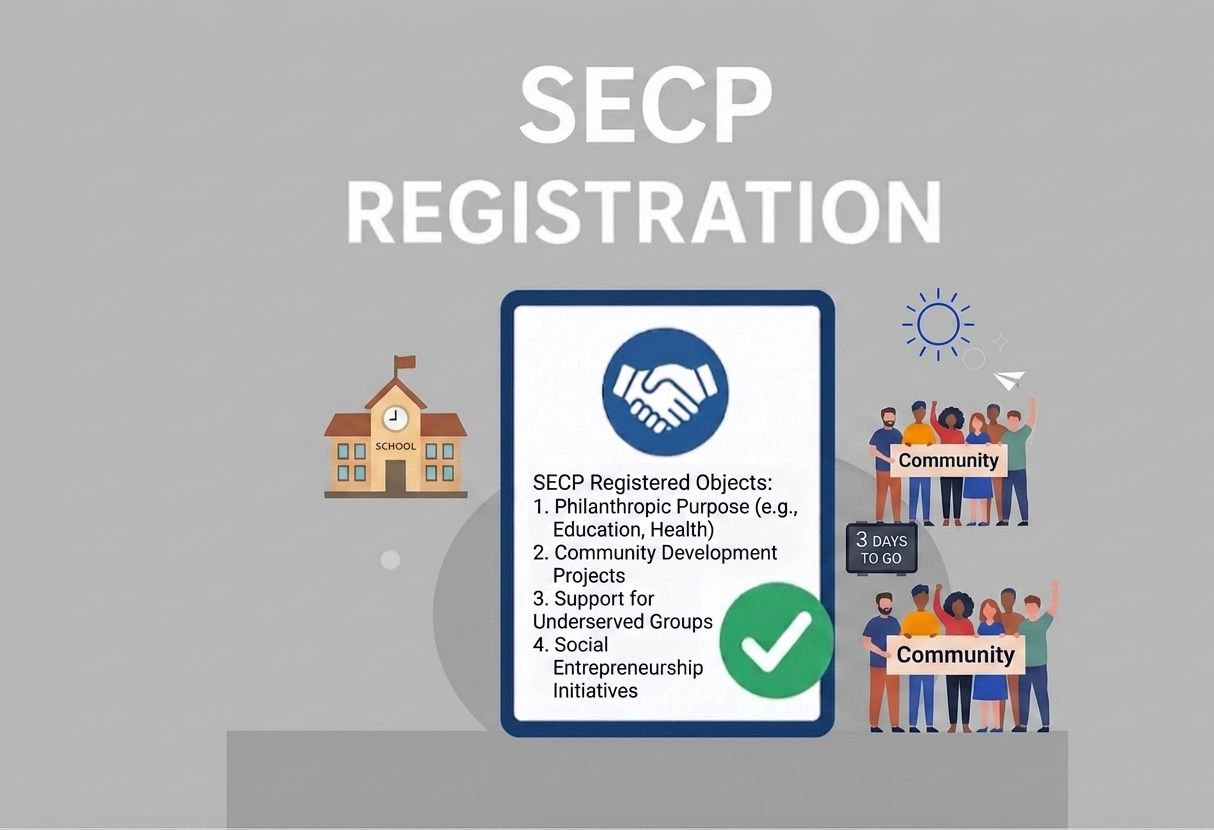
Formation and Registration of Section 42 Non-Profit Companies Under Companies Act, 2017
A Section 42 Company in Pakistan is a non-profit organization registered under the Companies Act, 2017 through the Securities and Exchange Commission of Pakistan (SECP). These companies are established for charitable, educational, religious, social welfare, scientific, sports, environmental, development, arts, cultural, or other public benefit purposes. The primary feature of a Section 42 company is...
Read More
NGO Registration in Punjab Charity Commission: When It Is Necessary and What Are the Requirements?
Non-Governmental Organizations (NGOs) play a vital role in social welfare, education, health services, poverty alleviation, and community development. In Punjab, Pakistan, the legal regulation of NGOs is carried out mainly through the Punjab Charity Commission (PCC) under the Punjab Charity Act 2018, which ensures transparency, accountability, and proper monitoring of all charitable and non-profit activities....
Read More
Registration of Trust under The Punjab Trusts Act, 2020
The Punjab Trusts Act 2020 is a provincial law enacted to replace the outdated colonial-era Trusts Act 1882 for Punjab. Its main objective is to modernize and regulate the creation, administration, and management of all private and public trusts within the province. The Act applies to family trusts, educational trusts, health trusts, and charitable trusts,...
Read More
From Approval to Action: How INGOs Begin Work in Pakistan
Starting an INGO (International Non-Governmental Organization) in Pakistan involves a formal legal and regulatory process because the Government of Pakistan closely monitors all foreign organizations working in the country. The purpose of this system is to ensure transparency, national security compliance, and alignment with development priorities. Therefore, no INGO can begin social work informally; it...
Read More
Procedure for Establishing a Women Shelter by an NGO in Pakistan
In Pakistan, establishing a women shelter by a private NGO is a highly sensitive and strictly regulated process, as it involves the protection, safety, and rehabilitation of vulnerable women, including survivors of violence, abuse, or abandonment. Any NGO intending to establish or operate a women shelter must obtain proper approval from the relevant government authorities...
Read More
How to Register an Orphanage in Punjab: CPWB Guidelines and Procedure
The establishment and registration of an orphanage in Punjab, Pakistan, is a regulated process designed to ensure the safety, care, and legal protection of orphaned and abandoned children. In Punjab, the primary regulatory authority responsible for overseeing orphanages and child care institutions is the Child Protection & Welfare Bureau (CPWB), Punjab, working in coordination with...
Read More